Fake Jobs, Real Scams: What Every Job Seeker Should Know
In today’s competitive job market, employment scams are becoming increasingly sophisticated and difficult to spot. Before moving forward with any opportunity, it’s important to understand the warning signs. In this article, read our tips on how to recognize and protect yourself from employment scams during your job search.
The New Reality of Job Hunting
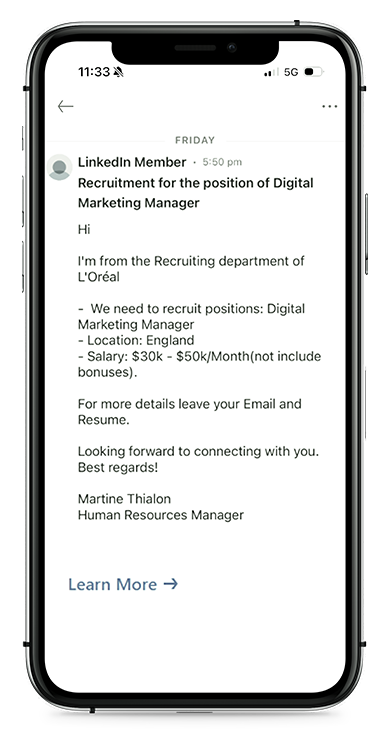
As the job market continues to feel the strain in 2026, an increasing number of scammers are taking advantage of people searching for work. Fake job ads are popping up across social media and job boards. Most of these fraudsters go as far as impersonating real companies and recruiters to appear authentic. What’s their goal? To trick job seekers into paying upfront fees, handing over personal information, or unknowingly doing free labor.
With so many people actively applying to dozens, sometimes even hundreds of positions, scammers are becoming more sophisticated, making it easier than ever to miss the warning signs. When frustration sets in, it’s tempting to apply to anything that comes across your screen. That’s why now more than ever, it’s important to understand how these scams present themselves and how to protect yourself, so you don’t let the red flags slip by. Below are three popular types of employment scams that you or someone you know should watch out for.
Example 1:
Type of Scam: Fake Job Listings
Fake job postings are essentially a fraudulent advertisement that claims to offer employment opportunities that are either misleading or non-existent. Most reputable job sites try to screen employers and remove suspicious postings, which makes fake listings less common but still possible. Scammers continue to find ways to slip through the cracks. Their goal is often the same: charge “application fees,” collect personal information, or pressure candidates into paying for phony training materials.
Common Patterns:
- Job requirements and descriptions are vague. Legitimate job postings always include clear responsibilities, required qualifications, and specific details about the role. Fake job listings are generally extremely broad with their requirements and expectations. If the only prerequisites are things like being 18 or older, being able to read, or knowing how to type, the listing may be fake. Scammers try to keep job descriptions ambiguous, that way everyone feels like a “perfect fit.”
- Offers that seem too good to be true. If a job description lists an unusually high salary for a role that requires minimal effort, tread carefully. For example, if they say you can earn $5,000 a week working from home just 3 hours a day, that should be the first clue something is off.
- Missing company contact information. Most fake job listings either fail to provide contact information, or they list random details that lead nowhere. If you notice specific information is missing, do some further investigation. Search for the company online and try to confirm basic details. If you come back with nothing, it is best to move on.
* If you receive an unsolicited call, text, or email claiming to be from Midcoast FCU asking for ANY of your personal or account information, HANG UP and/or DELETE THE MESSAGE. Contact us to report or verify the call, or if you feel your information has been compromised. We can assist you with next steps. 877.964.3262
Example 2:
Type of Scam: Email or Text Offers
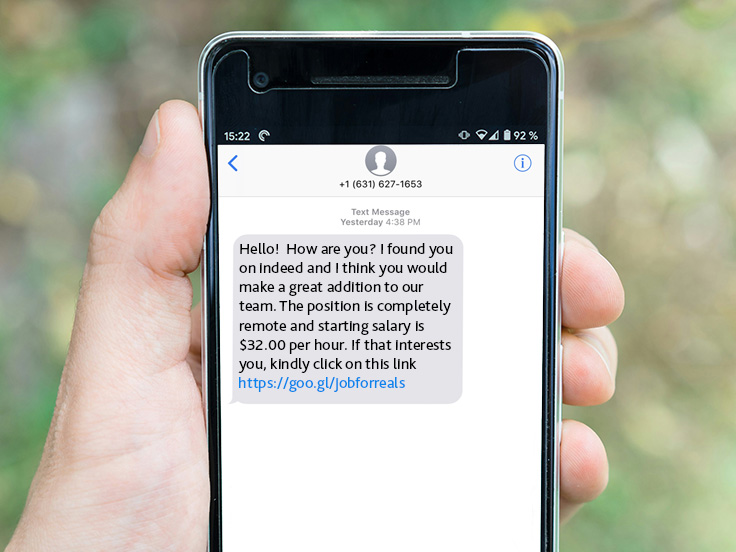
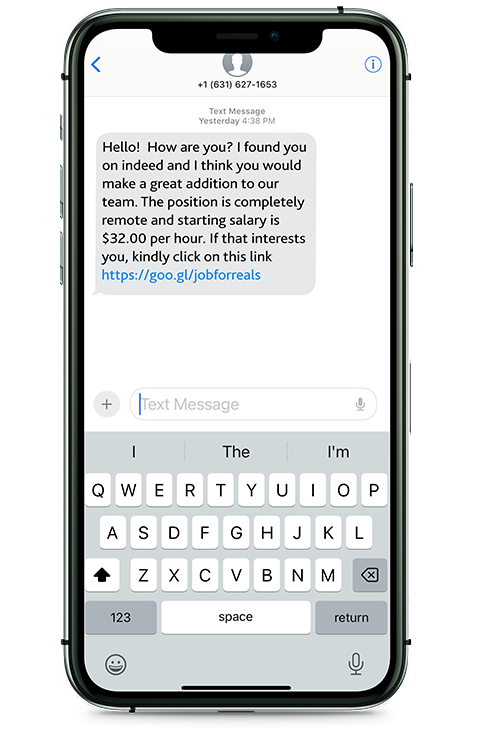
Sometimes, scammers will reach out to you directly and you will receive an email or text, claiming to be a recruiter who “found your resume online.” Getting these messages can be exciting, especially if you’re actively looking for a job. Typically, these are attempts to steal money or personal information so stay on high alert and never click on unknown links. When in doubt, you should immediately report the message as spam and block the sender.
Common Patterns:
- Someone pretending to be a recruiter contacts you unsolicited. A strong indicator of trouble is if a recruiter contacts you claiming they found your resume, and they have the perfect job opportunity for you. Whether or not you’re actively job hunting, it’s important to recognize that many of these unsolicited messages, especially those sent through text, email, or messaging apps, are not reputable.
- Unprofessional emails. Scam emails usually contain obvious errors and are poorly written. Make sure to pay close attention to the sender’s email address, the subject line, and the tone of the content. Look for real domains, free of typos, and authentically written emails, nothing automated.
- Requests for payment. Any message that asks for payment, whether it’s for training, equipment, or job placement, is a scam. No job will require payment for the chance to work.
Example 3:
Type of Scam: Remote Jobs
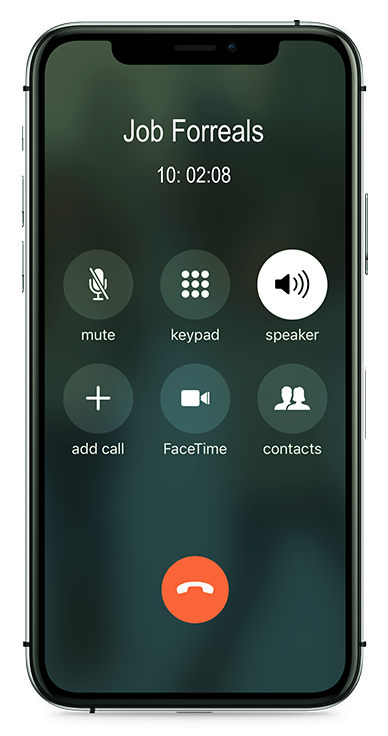
After COVID-19, remote jobs became sought out by many. There’s an appeal to being able to work from home and make money and scammers know this. It’s crucial to be particularly vigilant when searching for remote roles since the entire hiring process takes place online.
Common Patterns:
- Extensive pre-hire assignments before official hiring. Companies may ask you to complete a short, simple test project to get an understanding of your skills. If you’re asked to complete a detailed, lengthy task that is directly tied to the bottom line of the company, they are trying to get you to do free work for them.
- Interviews via personal chat apps such as Telegram or WhatsApp. Recruiters may message you on LinkedIn, but interviews will happen on Zoom, Teams, or Google Meet. Anything else, you should question it.
- Feel a sense of urgency? Run. Real, genuine companies do not skip steps. They have a minimum of one interview (sometimes multiple rounds), video calls, and true conversations with real people.
Tips to Avoid/Protect Yourself from an Employment Scam
- Never pay to get hired. Employers who are honest and reputable will never ask you to pay fees to apply, interview, or secure a position. Anyone who does is a scammer. A real employer invests in you, not the other way around.
- Do your research. Before engaging with a company, take time to verify the employer is real. You can do this in a variety of ways. Look for their official website, check their social media channels, or even compare what you find in their job listing to what appears on the company website. If something feels off that is a signal to slow down and investigate further.
- Look for complaints and reviews. Many job sites have review sections where employees and candidates share their experiences with an employer. These sections can give you insights into the hiring process and overall work culture. You can also search for the employer on the Better Business Bureau (BBB) website to see if there are negative reviews, complaints, or reports of fraudulent activity.
- Protect your personal information. Credible employers will not ask for sensitive information such as your social security number or bank account until after you have been hired. If a hiring manager or recruiter is asking for this information early in the process, take that as a sign to cut off all communications.
- Be cautious with unexpected or “cleared” checks. It is common for employment scams to escalate into fake-check scams. An employer will never send you a check to deposit and then ask you to send part of it back. Even if the check appears to have cleared, it will eventually bounce. And when it finally does, you will be responsible for paying the amount in full.
What to Do if you Suspect You or Someone Else Is Potentially in a Scam:
- Talk to someone you trust. Scammers often try to pressure you into making quick decisions by creating a sense of urgency. Before sharing personal information or sending money, talk through the situation with a friend or family member. Getting a second opinion can help you identify possible red flags you may have overlooked.
- Block communications from the sender. If you suspect you are interacting with a fraudulent person or message, block the sender and report their message as spam. If the scammer called or texted you, block their phone number from your phone.
- Inform your financial institution. Whether the scammer gained access to your financial information or deceived you into sending them money, call your financial institution immediately and inform them of what happened. They might be able to cancel the check before it’s processed, reverse the charge, or monitor your account for suspicious activity.
- Report the scam. Reporting scams not only protects you, but it also protects others. If you encounter a fraudulent job posting or believe you have been targeted, report it to the Federal Trade Commission (FTC) at ftc.gov/complaint